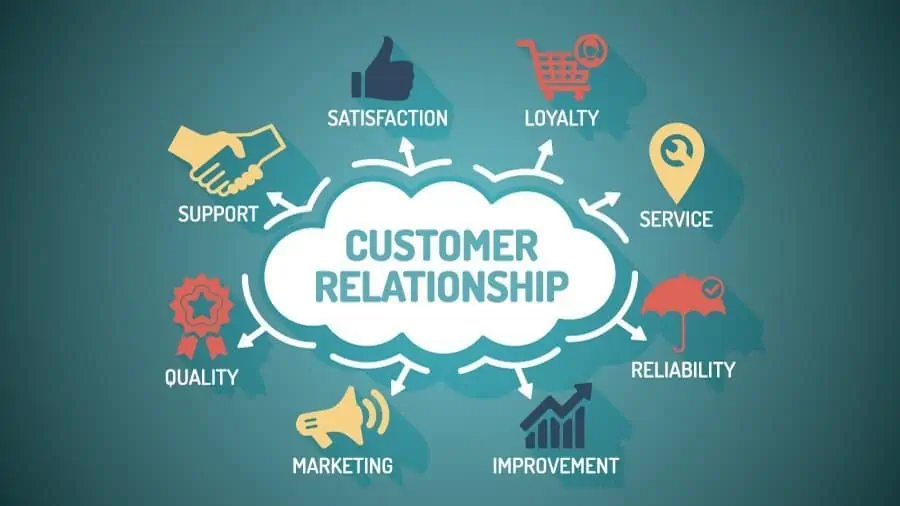
Enhancing Customer Relationships with Purpose-Built Software: A Catalyst for Business Success. This exploration delves into how strategically designed software transforms customer interactions, driving business growth. We’ll examine the characteristics of purpose-built CRM solutions, contrasting them with generic systems and highlighting the advantages of tailored approaches. The impact on streamlining communication, automating processes, and leveraging data analytics for personalized experiences will be central to our discussion.
From selecting the right software and navigating integration challenges to measuring return on investment, we’ll provide a comprehensive guide for successful implementation. Real-world case studies will illustrate the tangible benefits, showcasing how diverse businesses have achieved improved customer satisfaction and loyalty through the strategic use of purpose-built CRM systems. Finally, we will look ahead to future trends, including the role of AI and machine learning in shaping the next generation of customer relationship management.
Defining Purpose-Built Software for Customer Relationship Enhancement
Purpose-built software represents a significant advancement in managing customer relationships, moving beyond generic solutions to offer highly tailored functionalities that directly address specific business needs. This targeted approach allows companies to streamline operations, improve customer interactions, and ultimately drive greater success. Understanding the characteristics and applications of purpose-built CRM software is crucial for businesses aiming to optimize their customer relationship strategies.
Purpose-built software for customer relationship enhancement is characterized by its deep integration with specific business processes and workflows. Unlike generic CRM systems, which offer a broad range of features, purpose-built solutions focus on a narrower set of functionalities, but they execute these functions with superior efficiency and precision. This specialization allows for a more intuitive user experience, reduced complexity, and ultimately, better results in managing customer interactions.
Examples of Purpose-Built CRM Software
Several types of purpose-built software cater to different aspects of customer relationship management. These range from solutions focused on specific industries (e.g., healthcare, finance) to those addressing particular business functions (e.g., marketing automation, sales force automation). Examples include:
- E-commerce CRM: Designed to manage interactions with online customers, tracking website activity, managing orders, and handling customer service inquiries through various channels (e.g., email, chat).
- Sales Force Automation (SFA) Software: Automates sales processes, including lead management, opportunity tracking, and sales forecasting. It often integrates with other systems like marketing automation platforms.
- Marketing Automation Software: Automates marketing tasks like email campaigns, social media engagement, and lead nurturing, helping to improve customer engagement and conversion rates.
- Customer Service Software: Focuses on managing customer support requests, often incorporating features like ticketing systems, knowledge bases, and live chat functionalities.
Generic CRM vs. Purpose-Built Solutions: A Comparison
While generic CRM systems offer a wide array of features, they may lack the depth and integration needed for optimal performance in specific business contexts. Purpose-built solutions, in contrast, provide specialized functionalities that are deeply integrated with the business’s unique workflows. This comparison highlights the key differences:
| Feature | Generic CRM | Purpose-Built CRM |
|---|---|---|
| Functionality | Broad range of features, often with limited depth in any one area. | Focused on a specific set of functionalities, deeply integrated with business processes. |
| Customization | Requires significant customization, potentially leading to increased complexity and cost. | Often pre-configured for specific needs, requiring minimal customization. |
| Integration | May require extensive integration with other systems, leading to potential compatibility issues. | Often seamlessly integrates with existing systems relevant to its specific function. |
| Cost | Can be expensive, particularly with extensive customization and integration needs. | May offer more cost-effective solutions tailored to specific needs, avoiding unnecessary features. |
Categorization and Comparison of Purpose-Built CRM Software
Different categories of purpose-built CRM software offer distinct benefits depending on the specific business needs. The following table summarizes key features and benefits:
| Category | Key Features | Benefits | Example Use Case |
|---|---|---|---|
| E-commerce CRM | Order management, website analytics, customer support integration, marketing automation tools | Improved customer experience, increased sales conversion, streamlined order fulfillment | An online retailer managing customer orders and interactions through their website. |
| Sales Force Automation (SFA) | Lead management, opportunity tracking, sales forecasting, pipeline management | Increased sales efficiency, improved sales forecasting accuracy, better lead qualification | A SaaS company tracking sales opportunities and managing their sales pipeline. |
| Marketing Automation | Email marketing, social media management, lead nurturing, campaign tracking | Improved marketing ROI, enhanced customer engagement, automated marketing workflows | A B2B company nurturing leads through automated email sequences and social media engagement. |
| Customer Service | Ticketing system, knowledge base, live chat, self-service portal | Improved customer satisfaction, reduced resolution times, increased efficiency of customer support | A telecommunications company managing customer support requests and providing self-service options. |
Analyzing the Impact of Purpose-Built Software on Customer Interactions
Purpose-built software significantly alters the landscape of customer interactions, moving away from fragmented, inefficient systems towards a more streamlined and personalized experience. This transformation impacts not only customer satisfaction but also overall business efficiency and profitability. By integrating various communication channels and automating key processes, these solutions foster stronger, more meaningful relationships with customers.
The integration of purpose-built software directly impacts how businesses manage and respond to customer inquiries. This leads to improved customer satisfaction, increased operational efficiency, and a better understanding of customer needs, ultimately driving business growth.
Streamlined Customer Communication Channels
Purpose-built software centralizes communication channels, allowing businesses to interact with customers across multiple platforms – email, live chat, social media, and phone – from a single interface. This eliminates the need for employees to switch between different systems, improving response times and reducing the risk of missed communications. For example, a customer service representative can access a complete history of a customer’s interactions, regardless of the initial contact method, providing a seamless and personalized experience. This unified view prevents inconsistencies and ensures that each interaction builds upon previous ones, creating a more cohesive and positive customer journey.
Automation Features Enhancing Customer Service Efficiency
Automation features within purpose-built software are pivotal in boosting customer service efficiency. Automated responses to frequently asked questions (FAQs), automated appointment scheduling, and automated follow-up emails free up human agents to focus on more complex issues. For instance, a chatbot can handle simple inquiries like order tracking or password resets, while human agents can handle more nuanced problems requiring empathy and problem-solving skills. This division of labor improves response times for all customers, enhances agent satisfaction by reducing repetitive tasks, and allows for a more efficient allocation of resources.
Data Analytics for Improved Customer Understanding and Personalization
Purpose-built software often incorporates robust data analytics capabilities. By tracking customer interactions, preferences, and purchase history, businesses can gain valuable insights into customer behavior. This data can be used to personalize marketing campaigns, tailor product recommendations, and proactively address potential issues. For example, if data reveals a high number of returns for a particular product, the business can investigate the cause and implement corrective measures, such as improving product descriptions or offering better customer support. This data-driven approach allows for proactive customer service, enhancing customer loyalty and satisfaction.
Improved Customer Interaction Metrics After Implementing Purpose-Built Software
The implementation of purpose-built software generally leads to significant improvements across several key customer interaction metrics. The positive impact is quantifiable and demonstrates a clear return on investment.
- Increased Customer Satisfaction (CSAT) scores: Faster response times and personalized interactions lead to happier customers.
- Reduced Customer Churn: Proactive issue resolution and personalized experiences foster customer loyalty.
- Improved First Contact Resolution (FCR) rates: Efficient access to customer information and streamlined processes enable quicker problem-solving.
- Shorter Average Handling Time (AHT): Automation and efficient workflows reduce the time spent on each customer interaction.
- Higher Net Promoter Score (NPS): Improved customer experiences translate into increased customer advocacy.
Strategic Implementation of Purpose-Built Software for Business Growth
Successfully integrating purpose-built software requires careful planning and execution. A strategic approach ensures the software enhances, rather than hinders, business operations, ultimately driving growth and maximizing return on investment. This section outlines key considerations for a smooth and effective implementation.
Choosing the right purpose-built software is paramount for achieving business goals. Factors such as scalability, integration capabilities, user-friendliness, and long-term support significantly impact the software’s effectiveness. A thorough needs assessment, coupled with a comparison of available solutions, is crucial for making an informed decision. The chosen software should seamlessly integrate with existing systems to avoid data silos and operational disruptions.
Key Factors in Purpose-Built Software Selection
Several critical factors must be considered when selecting purpose-built software. Overlooking these aspects can lead to inefficient processes and ultimately, a poor return on investment.
- Scalability: The software should be able to adapt to the company’s growth. Consider future needs, not just current requirements. A system that cannot handle increased data volume or user numbers will quickly become a bottleneck.
- Integration Capabilities: Seamless integration with existing systems (e.g., ERP, accounting software) is vital. Data silos create inefficiencies and hinder data-driven decision-making. Prioritize solutions offering robust API integrations or pre-built connectors.
- User-Friendliness: The software should be intuitive and easy to use for all employees. A complex interface can lead to low adoption rates and wasted training resources. Look for solutions with clear navigation, helpful tooltips, and comprehensive documentation.
- Vendor Support and Maintenance: Reliable vendor support is crucial for addressing issues and ensuring the software remains up-to-date. Investigate the vendor’s reputation, service level agreements (SLAs), and the availability of training and documentation.
- Cost and Return on Investment (ROI): Analyze the total cost of ownership, including licensing fees, implementation costs, training, and ongoing maintenance. Project the potential ROI based on anticipated efficiency gains and improved customer relationships.
Challenges in Integrating New Software with Existing Systems
Integrating new software with existing systems often presents significant challenges. Careful planning and a phased approach can mitigate these risks.
- Data Migration: Transferring data from legacy systems to the new software can be complex and time-consuming. Data cleansing and validation are essential to ensure data accuracy and integrity. Inconsistencies in data formats can also cause issues.
- System Compatibility: The new software must be compatible with existing systems to avoid conflicts and ensure seamless data flow. Compatibility testing is crucial before full implementation.
- Workflow Disruptions: Implementing new software can disrupt existing workflows. Thorough employee training and a well-defined change management plan are necessary to minimize disruptions and ensure smooth transitions.
Step-by-Step Guide for Successful Software Implementation and Training
A structured implementation plan ensures a smooth transition and maximizes user adoption. This involves careful planning, execution, and ongoing support.
- Needs Assessment and Software Selection: Clearly define business needs and select software that aligns with those needs.
- Project Planning and Resource Allocation: Develop a detailed project plan, including timelines, milestones, and resource allocation.
- Data Migration and System Integration: Develop a robust data migration strategy and ensure seamless integration with existing systems.
- User Training and Support: Provide comprehensive training to all users, including hands-on sessions and ongoing support.
- Go-Live and Post-Implementation Review: Monitor the system’s performance after go-live and conduct a post-implementation review to identify areas for improvement.
Measuring the ROI of a Purpose-Built CRM System
Measuring the ROI of a CRM system requires a clear understanding of key performance indicators (KPIs) and a robust tracking mechanism. This allows for a quantifiable assessment of the system’s impact on business outcomes.
Several methods exist to measure ROI, including:
- Increased Sales Revenue: Track the increase in sales revenue attributed to improved customer relationships and sales processes facilitated by the CRM system.
- Improved Customer Satisfaction: Measure customer satisfaction using surveys, feedback forms, and Net Promoter Score (NPS) to assess the impact of the CRM system on customer experience.
- Reduced Customer Churn: Monitor customer churn rates to determine if the CRM system has helped reduce customer attrition. A lower churn rate translates to increased customer lifetime value.
- Increased Sales Efficiency: Analyze sales cycle length and sales conversion rates to determine if the CRM system has improved sales efficiency.
- Reduced Operational Costs: Assess whether the CRM system has led to reductions in operational costs, such as marketing expenses or customer service costs.
For example, a company might track the number of leads generated, the conversion rate of those leads into customers, and the average revenue per customer. By comparing these metrics before and after CRM implementation, they can calculate the increase in revenue attributable to the system. This increase, compared to the cost of the CRM system, provides a clear picture of the ROI.
Case Studies
This section presents three diverse case studies illustrating the successful implementation of purpose-built software to enhance customer relationships and drive business growth. Each example highlights different approaches, challenges overcome, and the resulting positive impacts on customer satisfaction and loyalty. Analyzing these real-world scenarios provides valuable insights for businesses considering similar strategies.
Case Study 1: Streamlining Customer Support at a Tech Startup
This case study focuses on “InnovateTech,” a rapidly growing software startup experiencing a surge in customer support inquiries. Their previous system, a generic helpdesk solution, proved inadequate for handling the volume and complexity of issues. To address this, InnovateTech implemented a purpose-built CRM system integrated with their product’s backend. This allowed support agents to access real-time data on user accounts, troubleshoot problems efficiently, and personalize interactions. The new system included features like automated ticket routing, knowledge base integration, and customer feedback surveys.
The implementation involved a phased rollout, starting with a pilot group of support agents. This allowed InnovateTech to identify and resolve any technical or process-related issues before a full-scale deployment. Training was provided to all agents, emphasizing the new system’s features and best practices.
Following implementation, InnovateTech experienced a significant reduction in average ticket resolution time (from 48 hours to 12 hours), a marked increase in customer satisfaction scores (from 75% to 92%), and a notable improvement in customer retention rates (a 15% increase). The personalized support enabled by the new system fostered stronger customer relationships and boosted brand loyalty.
Case Study 2: Enhancing Customer Engagement for a Retail Chain
“RetailGiant,” a large national retail chain, sought to improve customer engagement and loyalty through a more personalized shopping experience. They implemented a purpose-built loyalty program platform integrated with their point-of-sale (POS) system and e-commerce website. This platform allowed them to collect detailed customer data, track purchasing behavior, and deliver targeted promotions and recommendations. The system also enabled personalized email marketing campaigns and in-app messaging based on individual customer preferences.
The implementation required significant data migration and integration with existing systems. RetailGiant also invested heavily in training staff on the new platform and its features. They focused on data privacy and security, ensuring compliance with all relevant regulations.
The results were impressive. RetailGiant saw a substantial increase in customer loyalty program participation (a 30% increase), higher average transaction values (a 10% increase), and a significant rise in repeat purchases. The personalized marketing campaigns resulted in higher conversion rates and increased customer lifetime value.
Case Study 3: Optimizing Field Service Operations for a Home Services Company
“HandyHelp,” a home services company providing repairs and maintenance, struggled with scheduling inefficiencies and inconsistent service quality. They adopted a purpose-built field service management (FSM) software solution to address these challenges. This software integrated scheduling, dispatching, route optimization, and customer communication tools. Technicians gained access to real-time job information, customer details, and inventory management capabilities through mobile devices.
The implementation involved comprehensive training for technicians and office staff on the new software and its features. HandyHelp also implemented robust data backup and security measures.
Following implementation, HandyHelp saw significant improvements in scheduling efficiency (reducing appointment delays by 25%), improved technician productivity (a 15% increase in jobs completed per day), and enhanced customer satisfaction (a 20% increase in positive reviews). The streamlined operations and improved communication led to increased customer loyalty and a positive impact on the company’s bottom line.
Summary of Key Success Factors
| Business Type | Software Used | Key Improvements | Quantifiable Results |
|---|---|---|---|
| Tech Startup (InnovateTech) | Purpose-built CRM | Reduced ticket resolution time, increased customer satisfaction, improved retention | Ticket resolution time decreased by 75%, customer satisfaction increased by 17%, retention increased by 15% |
| Retail Chain (RetailGiant) | Loyalty program platform | Increased loyalty program participation, higher average transaction values, increased repeat purchases | Loyalty program participation increased by 30%, average transaction value increased by 10%, significant rise in repeat purchases |
| Home Services Company (HandyHelp) | Field service management (FSM) software | Improved scheduling efficiency, increased technician productivity, enhanced customer satisfaction | Appointment delays reduced by 25%, technician productivity increased by 15%, positive reviews increased by 20% |
Future Trends in Purpose-Built Customer Relationship Software
The landscape of customer relationship management (CRM) is rapidly evolving, driven by advancements in technology and shifting customer expectations. Purpose-built CRM software is at the forefront of this transformation, incorporating increasingly sophisticated features and functionalities to enhance customer interactions and drive business growth. Understanding the emerging trends in this space is crucial for businesses aiming to maintain a competitive edge.
The integration of emerging technologies is fundamentally reshaping the capabilities of purpose-built CRM software. This evolution is impacting not only the functionality of the software itself but also the very nature of customer interactions and the strategies employed to manage those interactions effectively.
Emerging Technologies and Their Impact on CRM
The convergence of several key technologies is driving significant advancements in CRM. Artificial intelligence (AI), machine learning (ML), and big data analytics are particularly impactful. AI-powered chatbots provide instant customer support, while ML algorithms personalize marketing campaigns and predict customer behavior. Big data analytics offer insights into customer preferences and trends, enabling businesses to tailor their offerings and strategies accordingly. Furthermore, the increasing adoption of cloud computing ensures scalability, accessibility, and cost-effectiveness. For example, Salesforce’s Einstein AI leverages ML to provide predictive insights, improving sales forecasting and customer service efficiency.
Future Trends in Purpose-Built Software Design and Functionality
Future iterations of purpose-built CRM software will likely emphasize seamless integration across multiple platforms and channels. This includes a unified view of the customer across all touchpoints, from website interactions to social media engagement. Expect to see increased focus on omnichannel experiences, personalized interactions, and proactive customer service. The design will prioritize intuitive user interfaces and mobile accessibility, catering to the needs of a diverse workforce and customer base. Software will also likely incorporate more robust security measures to protect sensitive customer data. For instance, we might see CRM systems proactively identifying and flagging potential security breaches, minimizing the risk of data loss.
The Role of AI and Machine Learning in Enhancing Customer Interactions
AI and ML are transforming customer interactions by automating routine tasks, personalizing experiences, and providing valuable insights. AI-powered chatbots can handle a large volume of customer inquiries, freeing up human agents to focus on more complex issues. ML algorithms can analyze customer data to identify patterns and predict future behavior, enabling proactive customer service and targeted marketing efforts. For example, a CRM system could use ML to identify customers at risk of churning and proactively offer them incentives to stay. This proactive approach enhances customer loyalty and reduces churn rates.
Visual Representation of the Evolution of Purpose-Built CRM Software
Imagine a graph charting the evolution of CRM software over the next five years. The X-axis represents time, spanning from the present to five years into the future. The Y-axis represents the level of sophistication and integration, ranging from basic functionality to highly advanced AI-driven capabilities. The graph would show a steep upward curve, starting from the current level of functionality and steadily increasing in sophistication. Initially, the curve would represent the integration of more advanced analytics and AI-powered features like chatbots and predictive analytics. In the middle years, the curve would show the increasing integration of omnichannel capabilities and personalized experiences. Finally, the highest point on the curve would represent a future where CRM systems are deeply integrated with other business systems, offering a truly holistic view of the customer and leveraging advanced AI to anticipate and meet their needs proactively. The overall shape suggests a rapid and significant advancement in the capabilities of purpose-built CRM software, driven by the integration of emerging technologies.
Closure
Ultimately, the success of any business hinges on its ability to cultivate strong customer relationships. Purpose-built software offers a powerful catalyst for achieving this goal, enabling businesses to streamline operations, personalize interactions, and ultimately drive growth. By understanding the nuances of selecting, implementing, and leveraging these sophisticated tools, organizations can unlock a new level of customer engagement and achieve lasting success. The future of CRM lies in the intelligent application of technology to foster meaningful connections, and this exploration has provided a roadmap for navigating that exciting landscape.