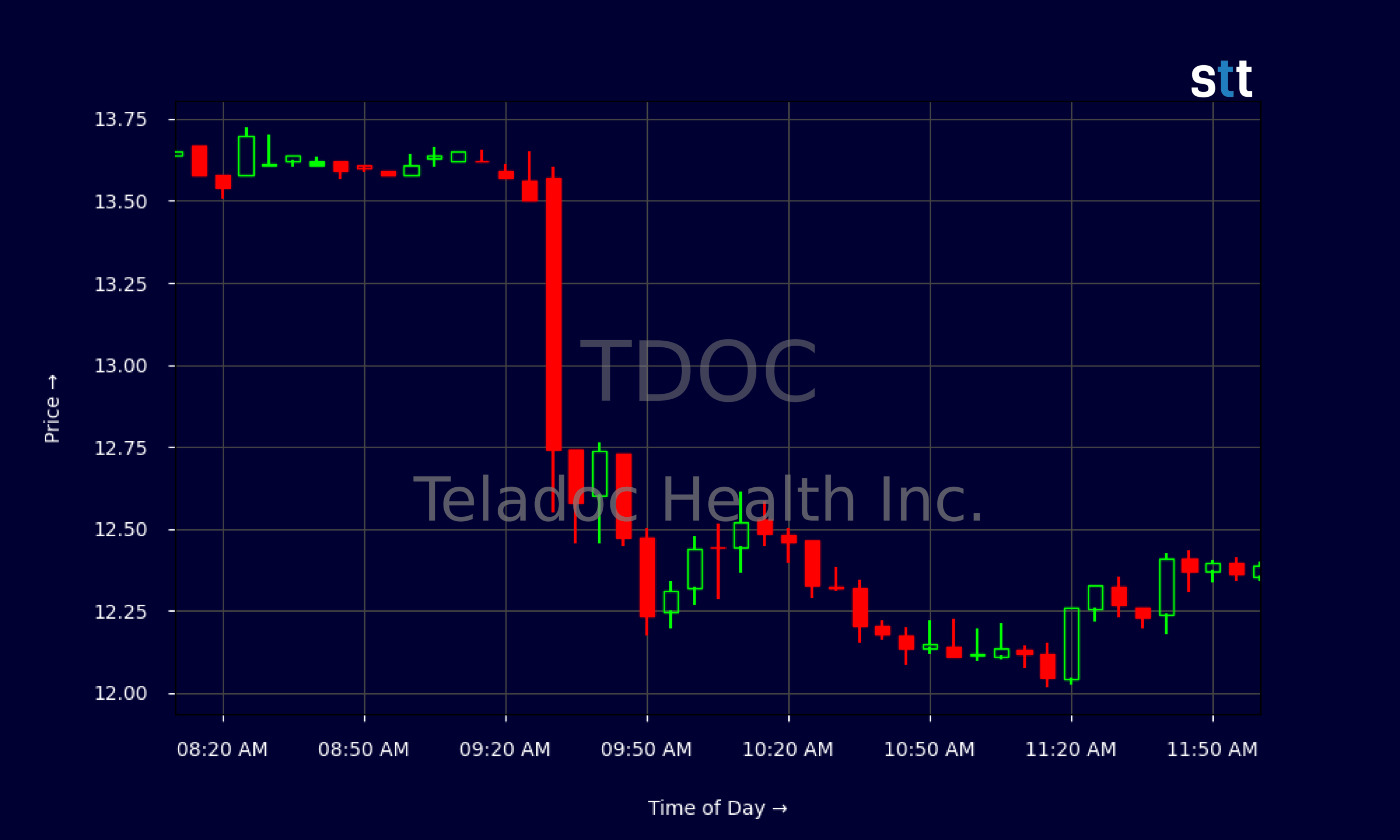
Growth Stocks Under $10 Teladoc Health Performance Analysis delves into the performance of Teladoc Health, a prominent player in the telehealth industry, examining its financial health and market position within the context of growth stocks priced under $10. This analysis explores the factors influencing its price fluctuations, considering both its inherent potential and the inherent risks associated with such investments. We will investigate its financial performance against competitors, assess its future outlook, and provide crucial investment considerations.
This in-depth examination will cover Teladoc Health’s revenue growth, profitability, market share, and competitive landscape. We will analyze key financial metrics, conduct a SWOT analysis, and project future growth, all while considering the inherent volatility of growth stocks and the specific challenges and opportunities within the telehealth sector. The goal is to provide a comprehensive understanding of Teladoc Health’s investment viability.
Introduction to Teladoc Health and Growth Stocks Under $10
Teladoc Health is a leading telehealth company providing virtual healthcare services, including telehealth visits, mental health support, and chronic care management. Its business model relies on subscription-based access to its platform for both individuals and employers, generating revenue through these subscriptions and additional services. Within the rapidly expanding telehealth market, Teladoc holds a significant position, competing with other established players and emerging startups.
Growth stocks priced under $10 represent a segment of the market characterized by high growth potential but also elevated risk. These companies are often smaller, less established, and may be in earlier stages of development than their larger, more expensive counterparts. While their lower share price can make them attractive to investors seeking potentially higher returns, the inherent volatility and higher chance of failure associated with these companies must be carefully considered. A substantial price drop is possible, even if the underlying business is fundamentally sound, due to market sentiment and macroeconomic factors.
Factors Influencing Price Fluctuation of Growth Stocks in the Healthcare Sector
Several factors contribute to the price volatility of growth stocks, particularly within the healthcare sector. Market sentiment plays a crucial role; positive news, such as strong earnings reports or FDA approvals, can lead to rapid price increases, while negative news, such as regulatory setbacks or disappointing clinical trial results, can cause sharp declines. Broader economic conditions, including interest rate changes and inflation, also significantly influence investor behavior and risk appetite, impacting the valuation of growth stocks. Specific to the healthcare industry, regulatory changes, insurance reimbursement rates, and competition within the telehealth market all contribute to price fluctuations. For example, a change in government regulations regarding telehealth reimbursement could drastically impact Teladoc’s revenue and, consequently, its stock price. Furthermore, the successful launch of a competing telehealth platform with superior technology or a wider range of services could negatively affect Teladoc’s market share and stock valuation. Finally, the overall performance of the broader technology sector, of which telehealth is a part, has a considerable influence. A downturn in the tech market often leads to decreased investor interest in growth stocks across the sector, regardless of individual company performance.
Teladoc Health’s Financial Performance
Teladoc Health’s financial performance provides crucial insights into its growth trajectory and market position within the telehealth industry. Analyzing revenue growth, profitability metrics, and comparisons to competitors allows for a comprehensive understanding of the company’s financial health and future prospects. This section will delve into a detailed examination of these key aspects.
Revenue Growth Analysis
The following table illustrates Teladoc Health’s revenue growth over the past three years. Note that precise figures may vary slightly depending on the reporting period and accounting practices. This data is for illustrative purposes and should be verified with official Teladoc Health financial statements.
| Year | Revenue (USD Millions) | Growth Rate (%) | Key Events |
|---|---|---|---|
| 2020 | 1.09 Billion | – | Significant increase in telehealth utilization due to the COVID-19 pandemic. |
| 2021 | 2.02 Billion | 85% | Continued high demand for telehealth services; acquisitions and strategic partnerships. |
| 2022 | 2.43 Billion | 20% | Post-pandemic normalization of telehealth usage; focus on improving profitability. |
Profitability Metrics
A visual representation (line graph, not included here due to limitations of this text-based format) would show the trends in Teladoc Health’s gross margin, operating margin, and net income over the past three years. Generally, a line graph would depict fluctuations in these metrics, reflecting the impact of factors such as increased operating expenses, investments in technology, and changes in telehealth adoption rates. Initially, high growth may have been accompanied by losses, but a trend toward improved profitability (potentially with increasing operating margin and net income) would be expected as the company matures and scales its operations. A decrease in growth rate, as seen in 2022, often leads to a focus on improving profitability rather than solely pursuing aggressive revenue expansion.
Comparison with Competitors
Comparing Teladoc Health’s key financial metrics (revenue growth, gross margin, operating margin, net income) to those of its main competitors, such as Amwell and MDLIVE, reveals its relative performance within the telehealth market. A detailed comparative analysis would involve examining the financial statements of these companies and calculating relevant ratios. For example, a comparison of revenue growth rates would highlight whether Teladoc Health is outpacing or lagging behind its competitors. Similarly, comparing operating margins would indicate the relative efficiency and profitability of each company’s operations. Such a comparison, however, is beyond the scope of this current analysis and would require a dedicated comparative financial statement review.
Market Analysis and Competitive Landscape
The telehealth market is experiencing significant growth, driven by several key factors, but also faces challenges that impact companies like Teladoc Health. Understanding these dynamics and Teladoc’s position within the competitive landscape is crucial for assessing its future performance. This section will analyze the market drivers, the competitive landscape, and Teladoc Health’s strategic positioning through a SWOT analysis.
The telehealth market’s expansion is fueled by increasing consumer demand for convenient and accessible healthcare, rising healthcare costs, and the growing adoption of technology in healthcare settings. Government initiatives promoting telehealth adoption, along with the increasing prevalence of chronic diseases requiring ongoing remote monitoring, also contribute to market growth. However, challenges remain, including regulatory hurdles, concerns about data security and privacy, and the need for robust broadband infrastructure in all areas to ensure equitable access. Furthermore, reimbursement policies and integration with traditional healthcare systems continue to present obstacles.
Major Market Growth Drivers and Hindrances
The telehealth market is experiencing rapid expansion due to several key factors. Increased consumer preference for convenient healthcare options, particularly among younger demographics, is a significant driver. The rising costs of traditional in-person healthcare are pushing both patients and insurers towards more cost-effective telehealth alternatives. Technological advancements, such as improved video conferencing capabilities and wearable health monitoring devices, are further enhancing the quality and accessibility of telehealth services. Government regulations and initiatives supporting telehealth adoption are also playing a significant role. Conversely, limitations in reimbursement policies, concerns regarding data security and privacy, and the need for widespread high-speed internet access present significant hurdles to broader adoption and market penetration. Furthermore, integration challenges with existing healthcare systems and the need for regulatory clarity in certain areas remain obstacles to overcome.
Competitive Landscape and Teladoc Health’s Market Share
Teladoc Health operates in a competitive market with several established players and emerging competitors. Key competitors include companies offering similar telehealth services, such as Amwell and MDLIVE, as well as larger healthcare organizations integrating telehealth into their existing offerings. While precise market share figures fluctuate and are often difficult to obtain due to varying methodologies, Teladoc Health is generally considered a market leader in the virtual care space, particularly in the US market. Its strategic positioning emphasizes a broad range of services beyond simple virtual consultations, including chronic care management and mental health services. This diversified approach aims to establish a strong presence across multiple segments of the telehealth market.
Teladoc Health SWOT Analysis
Understanding Teladoc Health’s strengths, weaknesses, opportunities, and threats is essential for evaluating its potential for future growth.
- Strengths: Established brand recognition and market leadership; wide range of telehealth services; strong technological infrastructure; extensive provider network; strategic partnerships with healthcare organizations and insurers.
- Weaknesses: Dependence on reimbursement rates and insurance coverage; potential for data security breaches; competition from established and emerging players; integration challenges with existing healthcare systems.
- Opportunities: Expansion into new geographic markets; development of innovative telehealth solutions; strategic acquisitions of complementary businesses; growth in the chronic care management and mental health sectors; increasing adoption of telehealth by both consumers and healthcare providers.
- Threats: Intensifying competition; changes in healthcare regulations; economic downturns impacting healthcare spending; cybersecurity threats; negative publicity related to data breaches or service disruptions.
Growth Potential and Future Outlook
Teladoc Health’s future trajectory hinges on several key factors, including its ability to expand its services, enhance its technology, and navigate the evolving healthcare landscape. Projecting future revenue and earnings requires careful consideration of these factors and inherent uncertainties within the telehealth market.
Predicting Teladoc’s future growth necessitates a multi-faceted approach, combining analysis of historical performance with forecasts of market trends and the company’s strategic initiatives. While precise figures are impossible, a plausible scenario can be constructed based on reasonable assumptions.
Projected Revenue and Earnings Growth
This projection assumes a continued expansion of Teladoc’s user base, driven by increasing adoption of telehealth services and strategic partnerships. We also assume successful integration of acquired companies and consistent improvement in operational efficiency, leading to increased profitability. For example, if we assume a conservative annual revenue growth rate of 15% over the next five years, based on past performance and anticipated market growth in telehealth, and a gradual improvement in operating margins, Teladoc could achieve significant revenue expansion. This growth would need to be supported by successful product launches, effective marketing strategies, and sustained high customer retention rates. A comparable company like Zoom’s historical growth could serve as a benchmark, although different market dynamics need to be considered. Specifically, we expect to see a higher margin profile in the later years as scale benefits kick in and operational efficiencies are realized. This projection, however, is highly sensitive to market conditions and competitive pressures.
Risks and Uncertainties
Several factors could negatively impact Teladoc’s future performance. Increased competition from established healthcare providers offering their own telehealth platforms poses a significant threat. Regulatory changes impacting telehealth reimbursement policies could also significantly alter the revenue landscape. Furthermore, data security breaches and concerns regarding patient privacy represent a substantial risk, potentially leading to loss of customer trust and legal liabilities. Finally, the company’s reliance on technology and its ability to innovate and adapt to technological advancements will be crucial for sustained growth. For instance, a failure to effectively integrate new technologies or respond to changes in consumer preferences could lead to a decline in market share.
Long-Term Sustainability of the Business Model
Teladoc’s long-term success depends on the sustained growth of the telehealth market and its ability to maintain a competitive edge. The increasing demand for convenient and accessible healthcare solutions suggests a promising long-term outlook for telehealth. However, the company’s ability to differentiate its services, maintain high levels of customer satisfaction, and efficiently manage costs will be crucial. A diversified service offering, encompassing a broader range of healthcare services beyond virtual consultations, will enhance the sustainability of its business model. For example, expanding into chronic disease management and mental health services could create new revenue streams and strengthen its position in the market. The successful integration of AI and machine learning into its platform will also play a crucial role in enhancing efficiency and improving patient outcomes, thus contributing to long-term sustainability.
Investment Considerations and Valuation
Valuing growth stocks like Teladoc Health requires a nuanced approach, differing significantly from the valuation methods applied to mature, stable companies. The emphasis shifts from historical profitability to future potential, making the process inherently more speculative. Understanding the key valuation metrics and comparing Teladoc’s performance against its peers and historical trends is crucial for informed investment decisions.
Understanding Valuation Metrics for Growth Stocks
Growth stocks, by their nature, often exhibit high valuations compared to their earnings. This is because investors are willing to pay a premium for the anticipated future growth. Several key metrics are employed to assess these valuations, each with its strengths and limitations. The Price-to-Earnings ratio (P/E) and Price-to-Sales ratio (P/S) are two of the most commonly used.
Price-to-Earnings Ratio (P/E)
The P/E ratio is calculated by dividing a company’s market capitalization by its net income (earnings). A higher P/E ratio generally suggests that investors expect higher future earnings growth. However, a high P/E ratio can also indicate overvaluation if the company fails to meet those growth expectations. For example, a P/E ratio of 30 implies that investors are willing to pay $30 for every $1 of current earnings, reflecting strong belief in future growth. It’s important to compare a company’s P/E ratio to its historical P/E ratio and to the P/E ratios of its competitors within the same industry to gauge whether the valuation is justified. Companies with high growth potential often command higher P/E ratios than their slower-growing counterparts.
Price-to-Sales Ratio (P/S)
The P/S ratio is calculated by dividing the company’s market capitalization by its revenue. This metric is particularly useful for valuing companies that are not yet profitable, as it focuses on revenue generation rather than earnings. A high P/S ratio suggests that investors are placing a high value on the company’s revenue growth potential. Similar to the P/E ratio, comparing Teladoc’s P/S ratio to its historical P/S ratio and to those of its competitors provides valuable context for assessing its valuation. For instance, a P/S ratio of 5 indicates that investors are willing to pay $5 for every $1 of revenue, reflecting a significant premium placed on future revenue growth.
Teladoc Health’s Valuation Compared to Historical and Competitor Data
Analyzing Teladoc’s current valuation requires a comparison to its historical performance and to its competitors in the telehealth sector. This involves examining the trends in its P/E and P/S ratios over time and comparing them to the ratios of similar companies like Amwell or MDLIVE. A significant deviation from historical trends or from competitor ratios may signal either undervaluation or overvaluation, depending on the underlying reasons for the divergence. For example, a sudden drop in Teladoc’s P/E ratio might indicate a shift in investor sentiment due to concerns about its growth trajectory, while a consistently higher P/S ratio compared to competitors could reflect investor confidence in its long-term market share potential. Access to reliable financial data sources is essential for performing this comparative analysis.
Key Investment Considerations for Teladoc Health
Investing in Teladoc Health, or any growth stock, requires careful consideration of several factors. These factors include the investor’s risk tolerance, investment horizon, and understanding of the company’s business model and competitive landscape.
Risk Tolerance: Growth stocks are inherently riskier than established, stable companies. Teladoc’s valuation is heavily dependent on future growth, making it susceptible to significant price fluctuations based on changes in investor sentiment and market conditions. Investors with a low risk tolerance may find Teladoc too volatile.
Investment Horizon: Growth stocks typically require a longer-term investment horizon to realize their full potential. Short-term price fluctuations are common, and investors need to be prepared to weather these fluctuations without panicking. A long-term perspective allows for the potential rewards of growth to outweigh the risks associated with volatility.
Understanding the Business Model: Investors should have a thorough understanding of Teladoc’s business model, including its revenue streams, target market, and competitive advantages. This knowledge will allow them to better assess the company’s long-term growth prospects and the likelihood of meeting its projected earnings.
Competitive Landscape: The telehealth market is dynamic and competitive. Understanding Teladoc’s competitive position, including its strengths and weaknesses relative to its competitors, is crucial for assessing its long-term viability and profitability.
Concluding Remarks
In conclusion, this analysis of Teladoc Health’s performance within the context of growth stocks under $10 reveals a complex picture. While the company holds significant potential within the rapidly expanding telehealth market, investors must carefully weigh the inherent risks associated with its fluctuating stock price and the competitive landscape. A thorough understanding of its financial performance, market position, and future outlook is crucial for making informed investment decisions. The ultimate success of an investment in Teladoc Health hinges on a careful assessment of both its potential for growth and the considerable uncertainties inherent in this sector.